What this costs and how fast we can help
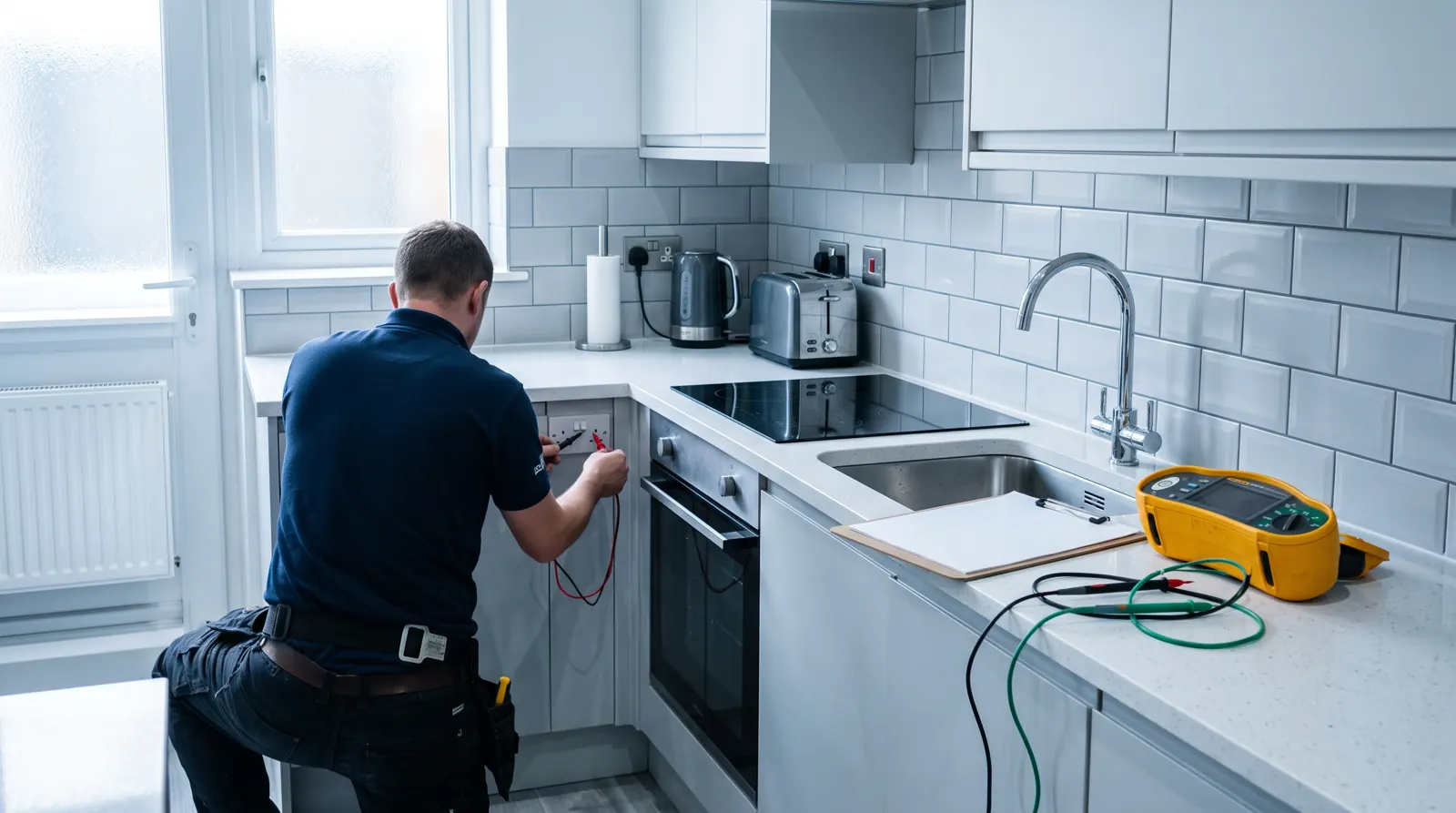
From £80 and usually within 1–2 hours, we provide a fixed written price before work starts so your bill will not exceed the quote. We’ll assess the circuit safely, test the installation and explain our response time and appointment availability.
Job — Price — What’s included - Extra socket — £55–£75 — Parts, labour, testing, certificate, VAT - Fault finding — £80/hr — Testing; most faults traced in 1–2 hours - Emergency visit — £120/hr — Out-of-hours, first hour minimum - Partial rewire — £1,200–£3,000 — Parts, labour, testing, certificate, VAT
We work 7am–6pm Monday to Saturday, with a 24-hour emergency line. We’ll isolate unsafe circuits where necessary and complete standards‑compliant testing before restoring supply. Prices exclude plastering, decoration, asbestos removal, DNO charges and access equipment.
The faults we are called out for most
- A plug or power point feels warm or hot to the touch.
-
Usually means a princes-road connection or damaged terminal creating heat — needs urgent attention.
-
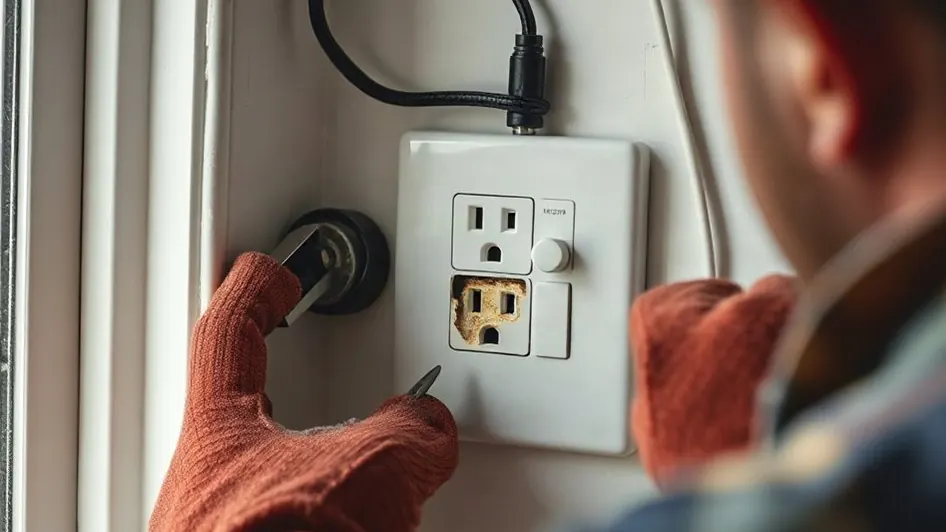
A power point or switch is blackened, discoloured or smells slightly burnt.
-
Usually indicates overheating or arcing at the socket and should be checked immediately.
-
A socket works sometimes and not other times, or devices lose power intermittently.
-
Usually caused by a princes-road or failing connection behind the socket.
-
Lights flicker or dim when you turn on big appliances (kettle, heater, oven).
-
Usually a circuit is overloaded or there’s a poor connection that can’t handle the load.
-
A specific power point or USB socket doesn’t work at all.
-
Usually a faulty accessory, damaged wiring, or a tripped/faulty circuit upstream.
-
Circuits trip repeatedly when you plug something in or switch something on.
-
Usually points to a faulty appliance, moisture in the circuit, or deteriorated wiring causing a short or earth fault.
-
USB ports on a power point don’t charge devices or only work intermittently.
-
Usually means the USB module has failed or the socket wiring isn’t supplying a stable feed.
-
Part of the house (one room or several sockets) has no power while the rest is fine.
-
Usually a problem at the consumer unit (fuse, breaker or wiring fault) or a damaged cable feeding that area.
-
Wiring is old, brittle or uses outdated wiring methods (you notice cloth-covered cable, old switches or no RCD protection).
- Usually means the home has legacy wiring that needs careful testing and likely replacement to meet current safety standards.
Safe checks to try before you call
Before calling us, you can safely rule out a few simple causes without removing a socket faceplate or touching any wiring. Start with a visual inspection: look for scorch marks, cracks, looseness, heat, buzzing or a burning smell. If any are present, stop using the socket, unplug appliances only if it is safe to do so, and switch off the relevant circuit at the consumer unit.
Check whether the appliance works in another known-good socket, and whether other sockets on the circuit have lost power. You may power-cycle a tripped RCD or circuit breaker once: switch it fully off, then back on; if it trips again, leave it off. Don’t use extension leads as a permanent workaround, overload adaptors, insert objects into sockets, or remove covers. We will identify the fault safely and advise the appropriate repair.
Note: it is commonly believed that testers and simple checks can definitively prove a socket is safe, but they cannot; only a qualified electrician can fully test and certify electrical safety in accordance with regulations.
Aluminium Wiring in Post-War Estates
We’ll assess sockets for overheating, unsuitable terminations and Aluminium corrosion, then advise on BS 7671-compliant repairs or replacement. Don’t tighten connections yourself: aluminium needs compatible accessories and correct preparation.
| Check | Risk | Our action |
|---|---|---|
| Loose terminal | Heat damage | Isolate and inspect |
| Scorching | Fire risk | Replace accessory |
| Aluminium corrosion | High resistance | Renew termination |
| Old earthing | Reduced protection | Recommend Bonding upgrades |
Where socket circuits show deterioration, we’ll explain whether local remedial work is appropriate or whether wider upgrading is safer. We provide a fixed written price before work begins, test completed repairs, and issue certification where required. If a socket is hot, discoloured or crackling, stop using it.
How we trace a fault
When a socket fault isn’t obvious, we’ll isolate the affected circuit safely and use BS 7671 test procedures to identify whether the issue is in the accessory, cable, connections or consumer unit. We prove dead before removing covers, then inspect for heat damage, princes-road terminals, incorrect polarity and signs of deterioration.
Our socket tracing and circuit mapping establish which sockets, spurs and protective devices belong together, particularly where alterations have obscured the original layout. We use appropriate continuity, insulation-resistance, polarity and earth-fault loop impedance tests to narrow the fault without unsafe guesswork. Where a fault may involve older VIR, rubber or aluminium wiring, we assess the condition carefully and avoid disturbing fragile conductors unnecessarily. We’ll explain what our findings mean, keep the circuit isolated where safety requires it, and record relevant test results before confirming the circuit is safe for service.
What it costs to put right
Costs to fix a faulty socket depend on what our testing finds, from a princes-road connection or damaged accessory to a circuit wiring fault — we’ll give a fixed written price before work starts so your bill won’t exceed the quote. Our work includes safe isolation, compliant testing and certification where required.
| Job | Price | What's included |
|---|---|---|
| Fault finding | £80/hr | Testing; most faults traced in 1–2 hours |
| Extra socket | £55–£75 | Parts, labour, testing, VAT and certificate |
| Partial rewire | £1,200–£3,000 | Compliant wiring upgrades, parts, labour and certification |
| Consumer unit replacement | £500–£700 | Parts, labour, testing, certificate and VAT |
Not included: plaster repairs, decoration, asbestos removal, DNO charges, or access equipment.
When it is an emergency instead
Most socket faults can be reported during normal hours, but burning smells, smoke, sparks, scorch marks, a hot socket, repeated tripping at the consumer unit or any risk of electric shock require urgent attention. Treat these signs as an immediate danger: do not use the socket, unplug equipment only if it is safe to do so, and do not touch damaged accessories or exposed conductors.
If there is smoke, fire or anyone has received an electric shock, call 999 first. Follow your evacuation plan, leave the property and keep others away. If it is safe to do so without approaching heat or damage you can isolate the affected circuit at the consumer unit; do not remove socket covers or attempt repairs yourself. Once emergency services confirm it is safe, our 24-hour emergency line can arrange for a qualified electrician to inspect, isolate the fault and carry out repairs to relevant standards.
Clarification: it is sometimes stated that landlords, employers or electrical contractors must immediately perform specific actions on the spot; in law the precise duties depend on the circumstances and applicable regulations (for example landlord or employer responsibilities under health and safety or housing law), but anyone in control of the premises should take reasonable steps to ensure safety and seek a qualified electrician where needed.
Older wiring around Dartford
In Dartford we commonly find older wiring concealed in Victorian terraces around the town centre and in Joydens Wood, where period properties often retain VIR (vulcanised india rubber) or other rubber‑insulated cable dating from the late 19th to early 20th century. These materials can deteriorate, loosen at terminal connections or be unsuitable for the higher socket loads found in contemporary homes in these specific Dartford neighbourhoods.
Where we work on Victorian fittings in the town centre conservation areas or on original rubber‑insulated runs in older Joydens Wood houses, we take care to preserve appropriate historic features while ensuring the work at that Dartford address complies with BS 7671 and Building Regulations Part P.
If, during our inspection of a specific Dartford property, we find damaged insulation, poor earth continuity or repeated heat marks at sockets or junctions, we will explain the safest remedial scope for that house in writing. After testing and verification at the Dartford address we will issue the relevant certification for any notifiable work carried out.